As Prof. Ryszard Pawlak from the Faculty of Mathematics and Computer Science, University of Lodz, reminds us:
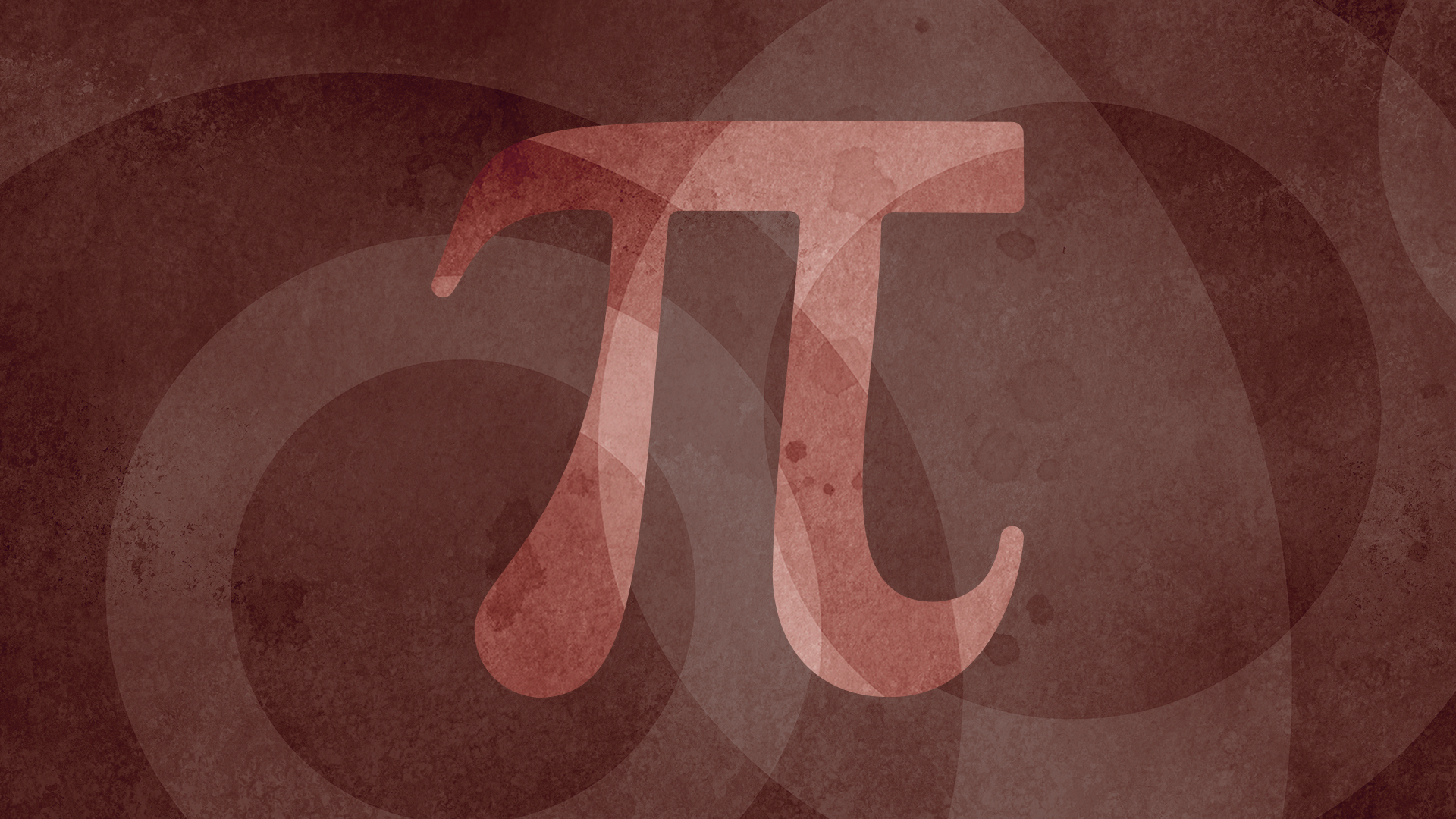
Pi Day is celebrated on 14 March because in American notation, this date appears as 3.14.
And while for some people, Pi is just something they once encountered in a class and then vanished along with the desire to calculate the area of a circle, the truth is that it's a legendary number. Prof. Pawlak explains that Pi is a mathematical constant defining the ratio of a circle's circumference to its diameter. It sounds serious, but it's not a problem! In practice, it means that without it, circles, waves and a host of physical phenomena would have a much harder time.
What's most fascinating, however, is that Pi has no end.
The decimal expansion of this number is infinite and non-periodic
– explains the scientist.
Interestingly, people were interested in Pi already thousands of years ago. The Babylonians, the Egyptians and then Archimedes. They all tried to figure out the exact value of this famous number. As Prof. Pawlak reminds us:
Even in ancient times, attempts were made to find good approximations of Pi.
…and today, thanks to computers, we already know trillions of digits. Yes, trillions, because if humanity insists, it either flies into space or calculates Pi to absurd lengths.
What's more, Pi even has an alternative name.
The Pi number is also called the Ludolphine number
– Prof. Pawlak reminds us.
It was named after Ludolph van Ceulen, who calculated it to 35 decimal places in the 16th century.
The designation itself didn't come out of nowhere either.
The symbol was introduced in the 18th century by the Welsh mathematician William Jones and later popularised by the famous scientist Leonhard Euler
– explains the mathematician.
And where did the whole holiday come from?
This is where the story gets even more interesting, as the first celebrations in 1988 in San Francisco involved, among other things, walking around a circle and eating cake. Yes, really. Because the English "pie" sounds almost like "pi". Science and cake? A perfect combination. Perhaps, that's what it's all about. As Prof. Pawlak emphasises, this day is meant to show that:
Mathematics can be interesting and inspiring for many people with diverse interests
…not just for Olympians and integral fans, but also for everyone who likes to know why the world works the way it does.
So, on 14 March we should raise a toast to the number that never ends and rules circles.
Happy π-day!
Materiał: prof. Ryszard Pawlak z Wydziału Matematyki i Informatyki Stosowanej UŁ
Redakcja: Kacper Szczepaniak, Centrum Komunikacji Marki